

Comprehensive Eye Exam
What Are The Benefits Of A Comprehensive Eye Exam?
Comprehensive exams evaluate all aspects of not only your vision, but your health as well.
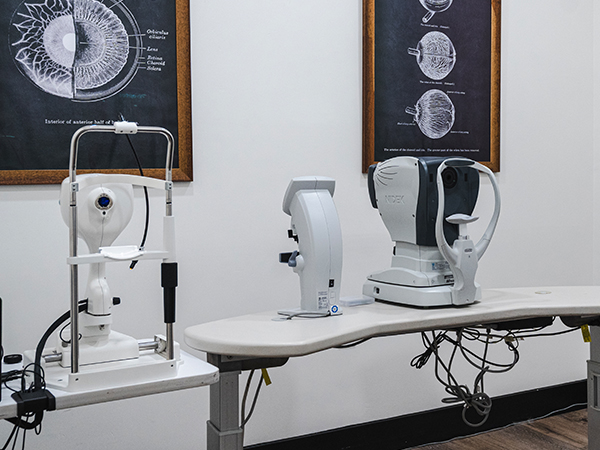
- Internal Exam – Using our Optomap technology, we are able to take a 200° image of your retina and optic nerve. This allows Dr. Palmer to get a wide field view of the inside of your eye without the hassle of dilation. Additionally, Dr. Palmer will use his slit lamp to check for possible cataract development.In some cases, dilation may still be necessary.
- Visual Function and Eye Health – The IOP checks the level of fluid pressure in your eyes to check for the possibility of glaucoma. This is not the 'puff' test.
- Glaucoma Testing – This is a test of fluid pressure within your eyes to check for the possibility of glaucoma.
- Visual Acuity – Dr. Palmer will test your vision with different lenses to determine if glasses or contacts will improve your vision.
Comprehensive eye exams look not at just your eyes, but your total health history as well.
Your eyes are a part of your body and should be treated accordingly. Dr. Palmer will discuss your overall health and that of your immediate family. Medications you take and many common ailments such as high blood pressure and diabetes can have adverse effects on your eyes without you even knowing. Outside factors such as smoking and sun exposure can also effect your eyes. All these factors can help Dr. Palmer properly assess your eye health.
Comprehensive eye exams are performed by eye professionals.
Eye doctors are highly trained, just like every other kind of doctor. After a bachelor's degree, Optometrists complete a four-year program to obtain their Doctor of Optometry degree. This allows Optometrists examine the eyes for visual defects, diagnose problems or impairments, and prescribe corrective lenses.
All Eye
Care Services
Keep
In Touch

Contact Info
Office Address: 150 Mary Ave. Suite 4
Nipomo, CA 93444
Nipomo, CA 93444
Call Or Text(805) 929-1982
Office Hours
- Monday Closed
- Tuesday 8:30am - 5:30pm
- Wednesday 9:30am - 5:30pm
- Thursday 8:30am - 5:30pm
- Friday 8:30am - 5:30pm
- Saturday 8:30am - 1:00 pm
- Sunday Closed
© 2026 Nipomo Optometry. All rights Reserved. Accessibility Statement - Privacy Policy - Sitemap
Powered by:
